Enrolled and reachable hosts
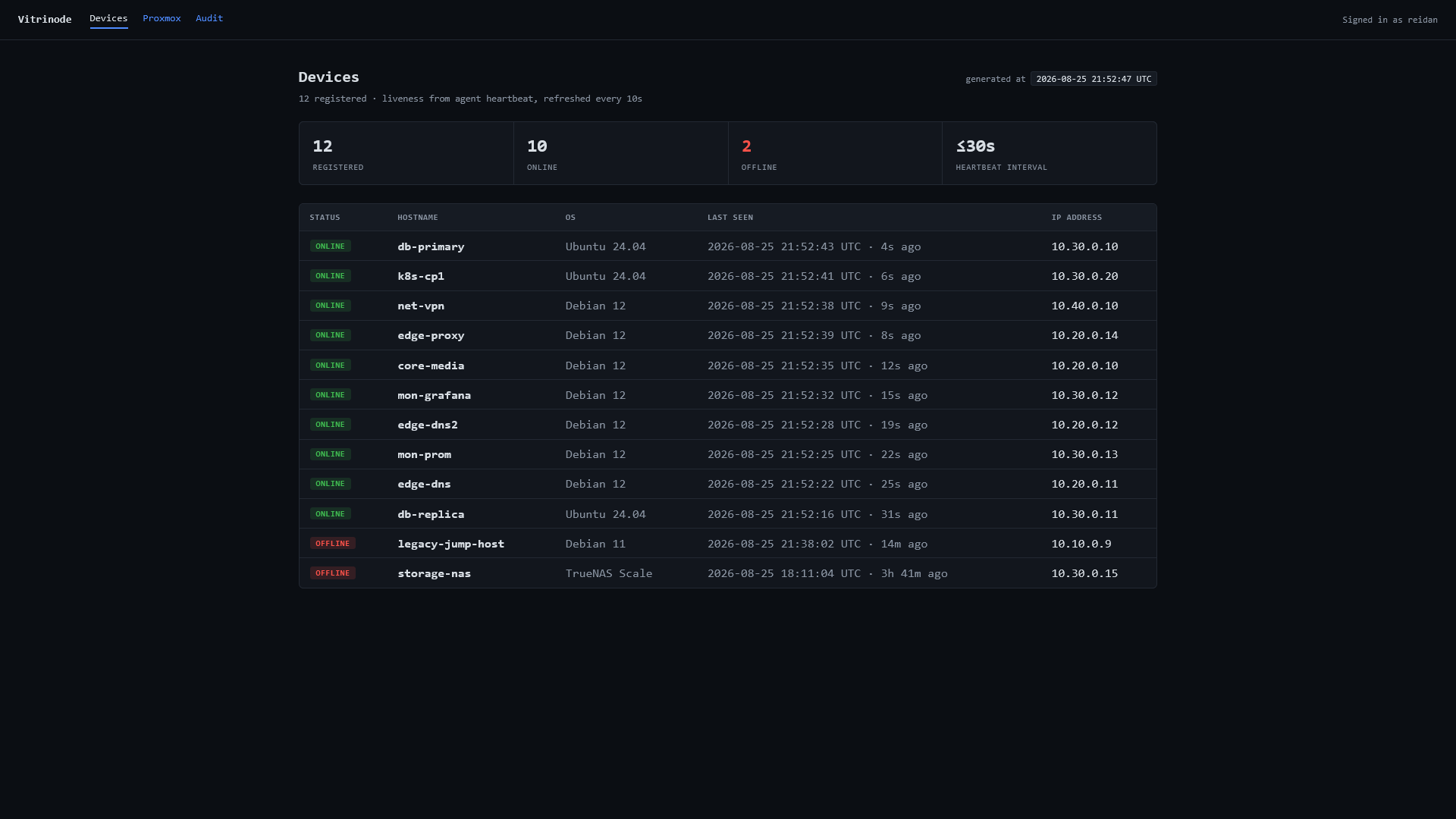
Hosts enrol with a single-use token and then send a heartbeat. If you run Proxmox VE, its guests are matched to enrolled devices so hypervisor state and agent state can be seen side by side. That view is read-only.

Vitrinode enrols Linux hosts, keeps track of what they're running and runs a small, fixed set of operations on them. Each host has its own key and certificate, administrators sign in with security keys, and anything privileged is signed, checked on the host and audited.
It's aimed at Ubuntu, Debian, SUSE and Red Hat Enterprise Linux, and works with Proxmox VE. It isn't finished. Vitrinode Ltd is working towards v1.0 and hasn't set a release date.
It's meant to sit alongside SSH and whatever configuration management you already use, not replace them.
Hosts enrol with a single-use token and then send a heartbeat. If you run Proxmox VE, its guests are matched to enrolled devices so hypervisor state and agent state can be seen side by side. That view is read-only.
Agents report system, storage, network, systemd, package and Docker facts. It's all stored so changes can be tracked later, but the full per-host inventory view isn't built yet.
There's a fixed list: host status, service list and status, available updates and service restart. No arbitrary commands. Every job is signed, expires and is audited, and a service restart also needs a fresh security-key check and a trusted device.
OpenSSH user certificates issued after a security-key check and only valid on one trusted host, so no long-lived administrator keys are stored centrally. Tested end to end on disposable hosts, signed for now by a development-only software CA.
Each part is only trusted with what it actually needs, so losing one credential or process doesn't give someone every host.
A valid device certificate says which device is talking, not whether it's in a good state. That's what attestation is for, and the two are tracked separately. TPM-backed evidence and the weaker software evidence aren't treated as the same thing, and privileged jobs only go to trusted devices. Vitrinode has no certifications and hasn't had a third-party penetration test.
Security model and limitations · Architecture and trust boundaries · Hardware signing
If you look after Linux servers, VMs and containers and want to see them in one place, with routine admin going through a route that's controlled and can be reviewed afterwards.
Visibility, controlled privileged operations and an audit trail matter just as much when the infrastructure belongs to a customer. Vitrinode is currently built around a single estate though, and there's no multi-tenancy.
As of , enrolment, mutual TLS, passkey sign-in, inventory collection, signed jobs, device attestation and Proxmox correlation are implemented and tested. Short-lived SSH certificates and the Vitrinode-HSM signing device are still in development.
Technical questions, business enquiries or interest in v1.0 are all fine to send now. Commercial agreements, licensing and formal evaluations will wait until v1.0 is out.